Why Drone Seeding Services Are Changing How UK Farmers Sow
The Shift From Tractor to Rotor
For years, the sight of a tractor pulling a drill across a field was the only way to get seed into the ground. Then I watched a multicopter hover over a muddy patch of oilseed rape that had failed to establish, and drop a fine rain of seed over it in under ten minutes. That moment stuck with me. The ground was too wet for machinery, the crop was too patchy to ignore, and the drone did what a tractor could not do without causing damage.
That experience is becoming more common across the UK. Drone seeding services are no longer a novelty. They are a practical option for farmers who need to cover awkward ground, spread cover crops between harvests, or repair a failed crop without compacting soil. The technology has matured, the regulations are clearer, and the results, when done properly, are genuinely useful.
What Drone Seeding Actually Involves
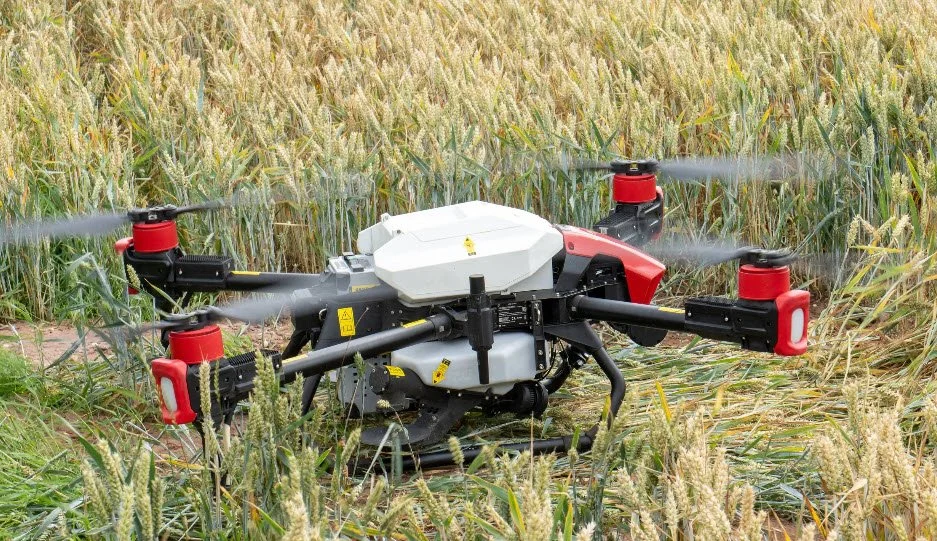
At its core, drone seeding uses an unmanned aerial vehicle, usually a multicopter, to distribute seed from the air. The most common platforms in the UK come from DJI, particularly the Agras series, and there are also larger systems from Yamaha and other manufacturers. These are not hobby drones. They carry hoppers that hold anywhere from ten to forty kilograms of seed, and they fly low over the crop to deliver a controlled spread.
The key difference from broadcasting by hand or with a spinner is precision. A drone can be programmed to follow the exact shape of a field, to vary the rate of seed across different zones, and to operate in conditions where a tractor would sink or flatten the crop. RTK GPS is often used to give centimetre-level accuracy, which matters when you are trying to avoid double-seeding a headland or missing a corner.
For a farmer, the appeal is not just convenience. It is the ability to do a job at the right time, not just when the ground allows. If a cover crop needs to go in after harvest and the weather is closing in, a drone can be on site within hours. That timing can make the difference between a successful catch crop and another season of bare soil.
Where Drone Seeding Fits on the Farm
One of the clearest uses is for cover crops. After a cereal crop comes off, the window for establishing a green cover is short. Drilling can be slow and can disturb the soil, which is exactly what no-till farming and regenerative agriculture try to avoid. Aerial seeding lets you get a mix of radish, vetch, or clover into the stubble without turning the ground. The seed sits on the surface and, with a bit of rain and good seed-to-soil contact, it gets away quickly.
I have also seen drone seeding used to overseed a thin sward in permanent pasture, where dragging a drill across the field would do more harm than good. The same approach works for repairing bare patches in a game cover or a steep bank that a tractor cannot reach safely. In these situations, the drone is not replacing the drill. It is filling a gap that no other tool can fill.
Variable rate seeding is another area where the technology shines. By using a prescription map, a drone can put more seed on the better parts of the field and less on the poor parts. That is harder to achieve with a broadcaster, and it can save money on seed while improving uniformity at harvest. It is not a substitute for precision seeding with a modern drill, but it is a legitimate option for certain jobs.
The Practical Trade-Offs
No tool is perfect, and drone seeding has limits. The main one is the amount of seed that can be carried. A single sortie from an Agras T30, for example, covers only a fraction of what a tractor and fertiliser spreader can handle in one pass. That means larger fields need multiple refills, which adds time and labour. For a whole field of winter wheat, conventional drilling is still the sensible route.
Another consideration is the need for calm weather. Drones are light and sensitive to wind. A gusty day can make the pattern uneven, and seed can drift off target. Good operators watch the forecast and fly only when conditions are right. That is a discipline, not just a technical detail.
Cost is also a factor. Hiring a drone service is not cheap per hectare compared with a standard drill pass, but the economics change when you factor in the value of timeliness, the avoidance of soil damage, and the potential to improve soil health over the long term. Farmers who use drone seeding services often point to reduced compaction and better moisture retention in the following season, which is hard to value on a simple cost sheet.
Beyond Seeding: The Same Platform Does More
The drones used for seeding are often the same ones that spread slug pellets, apply fertiliser, or spray pesticides. That versatility makes them easier to justify. If you already have a drone for spraying, adding a seeding hopper is a small extra investment. And if you are hiring a contractor, you can often get a package that covers multiple operations.
Slug pellets are a good example. After a wet autumn, slugs can wipe out a newly drilled crop. Spreading pellets by hand over a large field is slow, and a tractor can cause damage when the ground is soft. A drone can cover the same area quickly and place the pellets exactly where the slugs are active. The same logic applies to fertiliser spreading on a small or awkward field where a full-size spreader is overkill.
Pesticide application from drones is more regulated in the UK than in some other countries, but it is becoming more common for spot treatments and for late-season applications where ground access is restricted. The ability to see the crop from above, either through a camera or by using crop monitoring data, means you can target the problem rather than treating the whole field. That is good for the wallet and for the environment.
Equipment and Expertise
The market for agricultural drones is dominated by DJI, with the Agras series being the most widely used in the UK. There are also systems from Yamaha, which has a long history in aerial spraying, and from smaller manufacturers like RotorHazer, which builds specialised spreading equipment. John Deere, the familiar green and yellow brand, has been integrating drone data into its operations centre, which shows how far the industry has come.
But the hardware is only half the story. The skill lies in flying accurately, setting the right spread rate, and knowing how to handle the inevitable surprises, like a sudden change in wind or a tree line that interferes with the signal. That is why most farmers do not buy their own drone. They hire a specialist who has done this before. A good operator will talk to you about your crop, your soil, and your goals, not just take off and drop seed.
A Place in Modern Agriculture
Drone seeding services are not about replacing the drill. They are about adding a new tool to the box. For farmers who practice no-till farming, regenerative agriculture, or simply want to be more efficient, the ability to sow from the air changes what is possible. It also supports carbon sequestration, because it allows more cover crops to be grown and more roots to stay in the ground, which builds organic matter and improves soil health.
The next time you see a drone working a field, look closer. It might be spreading seed, but it is also spreading an idea: that agriculture can be precise, responsive, and gentle on the land at the same time. That is a future worth watching.